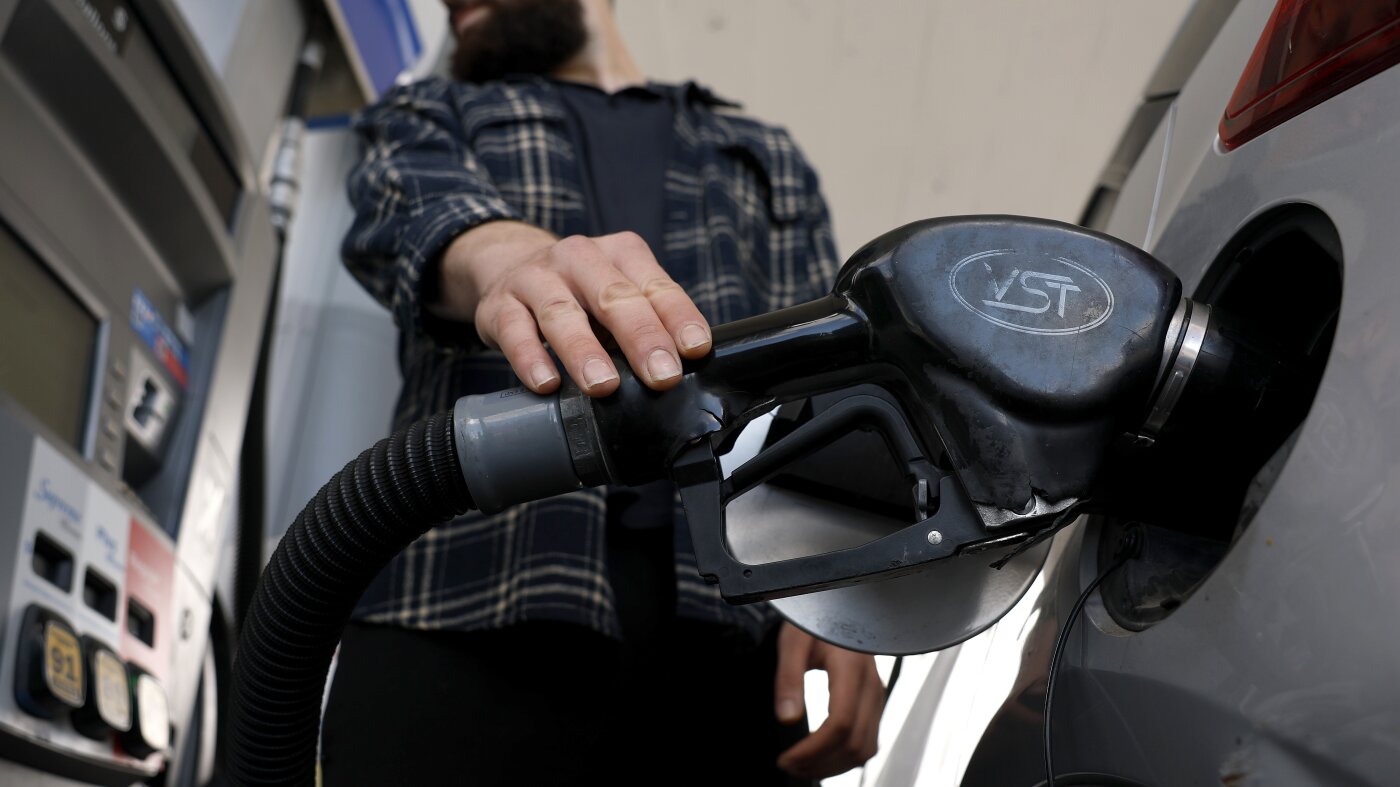
Fuel Saving Strategies - reflects broader US market developments, trading activity, and sentiment trends. The national average for a gallon of gasoline stands at $4.55 as the United States enters one of its busiest travel weekends of the year. To manage higher fuel costs, drivers are considering slower driving, switching to electric vehicles, or reducing trips altogether.
Live News
Fuel Saving Strategies - reflects broader US market developments, trading activity, and sentiment trends. Real-time data can reveal early signals in volatile markets. Quick action may yield better outcomes, particularly for short-term positions. The latest national average gasoline price of $4.55 per gallon has been reported as millions of Americans prepare for a peak travel weekend. According to the source, motorists are weighing several options to reduce fuel expenses, including driving at slower speeds, adopting electric vehicles (EVs), and minimizing or eliminating non-essential driving. Driving slower can improve fuel efficiency—the U.S. Department of Energy notes that each 5 mph decrease in highway speed may improve fuel economy by 7% to 14%. Switching to an electric vehicle would eliminate gasoline costs entirely, though upfront purchase prices and charging infrastructure remain considerations. For those unable to change vehicles, combining errands, carpooling, or using public transit could reduce total miles driven. The source does not provide specific savings estimates beyond these general strategies. The $4.55 figure represents a notable increase from recent norms, though it is not a record high. The timing coincides with the Memorial Day weekend or another holiday period, depending on the year, when gasoline demand typically peaks. Higher prices may be influencing travel plans, but the exact impact on aggregate demand remains unclear.
As Gas Prices Hit $4.55, Drivers Explore Fuel-Saving Strategies Ahead of Busy Travel Weekend Real-time access to global market trends enhances situational awareness. Traders can better understand the impact of external factors on local markets.Access to reliable, continuous market data is becoming a standard among active investors. It allows them to respond promptly to sudden shifts, whether in stock prices, energy markets, or agricultural commodities. The combination of speed and context often distinguishes successful traders from the rest.As Gas Prices Hit $4.55, Drivers Explore Fuel-Saving Strategies Ahead of Busy Travel Weekend Volume analysis adds a critical dimension to technical evaluations. Increased volume during price movements typically validates trends, whereas low volume may indicate temporary anomalies. Expert traders incorporate volume data into predictive models to enhance decision reliability.Expert investors recognize that not all technical signals carry equal weight. Validation across multiple indicators—such as moving averages, RSI, and MACD—ensures that observed patterns are significant and reduces the likelihood of false positives.
Key Highlights
Fuel Saving Strategies - reflects broader US market developments, trading activity, and sentiment trends. Observing correlations between markets can reveal hidden opportunities. For example, energy price shifts may precede changes in industrial equities, providing actionable insight. Key takeaways from the latest data include the pressure on household budgets from elevated gasoline costs. For consumers, even small behavioral changes—such as reducing speed by 5–10 mph, ensuring proper tire inflation, and avoiding excessive idling—could cumulatively lower fuel bills. Electric vehicles present a longer-term option, but high upfront costs and limited charging access may slow widespread adoption. From a market perspective, sustained high gasoline prices could lead to reduced driving miles and lower demand for gasoline, potentially easing price pressures over time. Conversely, if demand remains robust during the travel weekend, prices could stay elevated. The energy sector may see mixed impacts: oil refiners could benefit from high margins, while retailers of gasoline might face volume declines as consumers cut back. No specific forecasts have been provided in the source, but historical patterns suggest that consumers often adjust behavior when prices cross psychological thresholds like $4.00 per gallon. The shift toward fuel-efficient vehicles, including hybrids and EVs, tends to accelerate in such environments.
As Gas Prices Hit $4.55, Drivers Explore Fuel-Saving Strategies Ahead of Busy Travel Weekend Combining global perspectives with local insights provides a more comprehensive understanding. Monitoring developments in multiple regions helps investors anticipate cross-market impacts and potential opportunities.Observing market sentiment can provide valuable clues beyond the raw numbers. Social media, news headlines, and forum discussions often reflect what the majority of investors are thinking. By analyzing these qualitative inputs alongside quantitative data, traders can better anticipate sudden moves or shifts in momentum.As Gas Prices Hit $4.55, Drivers Explore Fuel-Saving Strategies Ahead of Busy Travel Weekend Traders often adjust their approach according to market conditions. During high volatility, data speed and accuracy become more critical than depth of analysis.Some investors integrate technical signals with fundamental analysis. The combination helps balance short-term opportunities with long-term portfolio health.
Expert Insights
Fuel Saving Strategies - reflects broader US market developments, trading activity, and sentiment trends. Predictive tools often serve as guidance rather than instruction. Investors interpret recommendations in the context of their own strategy and risk appetite. For investors, the current gasoline price environment may have implications across several sectors. Automakers with strong EV lineups—such as Tesla, General Motors, and Ford, among others—could see increased interest from consumers looking to avoid gasoline costs. However, the transition to electric mobility remains gradual, and traditional internal combustion engine vehicle sales may not decline sharply in the near term. The energy sector might experience mixed outcomes: upstream oil producers could benefit from sustained high prices, while downstream companies (e.g., refiners and fuel retailers) could face margin compression if demand falls. Renewable energy and battery storage stocks could also attract attention as alternatives to gasoline-dependent transportation. Broader economic impacts are worth monitoring. Higher gasoline prices act as a tax on consumers, potentially reducing discretionary spending in other areas. This could weigh on consumer-facing stocks and retail sectors that are not energy-related. However, the effect may be moderate if prices stabilize or decline after the holiday weekend. Disclaimer: This analysis is for informational purposes only and does not constitute investment advice.
As Gas Prices Hit $4.55, Drivers Explore Fuel-Saving Strategies Ahead of Busy Travel Weekend Some investors rely heavily on automated tools and alerts to capture market opportunities. While technology can help speed up responses, human judgment remains necessary. Reviewing signals critically and considering broader market conditions helps prevent overreactions to minor fluctuations.The integration of AI-driven insights has started to complement human decision-making. While automated models can process large volumes of data, traders still rely on judgment to evaluate context and nuance.As Gas Prices Hit $4.55, Drivers Explore Fuel-Saving Strategies Ahead of Busy Travel Weekend Access to real-time data enables quicker decision-making. Traders can adapt strategies dynamically as market conditions evolve.Investors may use data visualization tools to better understand complex relationships. Charts and graphs often make trends easier to identify.